Table of Contents
How do I start woodworking with no experience?
How does one venture into the world of woodworking, armed with no prior experience?
Embarking on the journey of basic woodworking involves a strategic sequence. Explore the following steps:
Education
Immerse yourself in books, blogs, and instructional videos to grasp the fundamentals and techniques of woodworking.
Acquire Essential Tools and Equipment
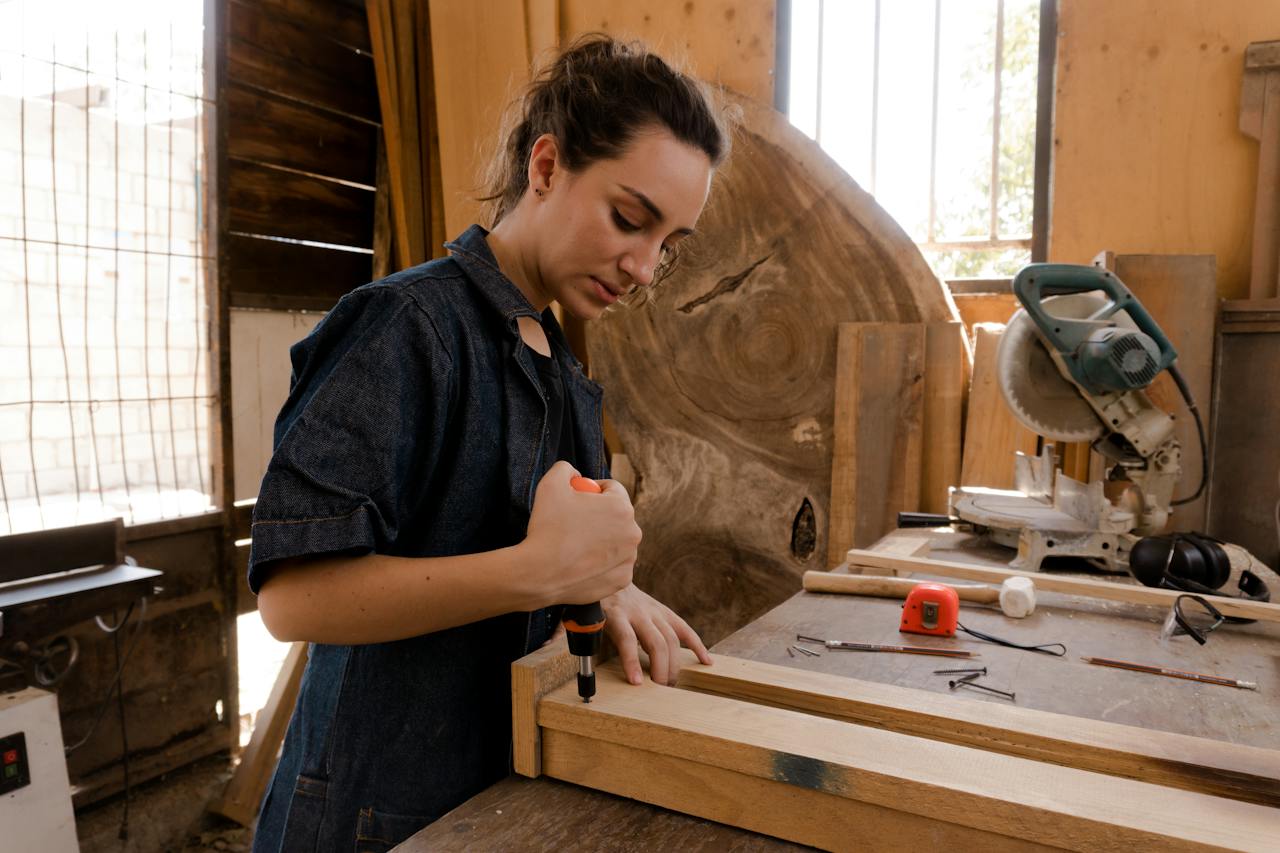
Invest in fundamental tools -a saw, chisels, a drill, and a measuring tape. Prioritize safety with protective gear like safety glasses and gloves. Familiarize yourself with tool operation guidelines.
Begin with Small Projects
Initiate your woodworking odyssey with simple projects, such as crafting a cutting board or a petite shelf. This hands-on experience will bolster your confidence.
Is Learning Woodworking a Scary Task?
While the initial foray may seem formidable, especially for novices, the learning curve is not insurmountable. The challenge lies in the complexity of projects attempted and the techniques honed. With practice, persistence, and a commitment to learning, one can master the skills needed for crafting exquisite and functional woodworking projects.
Distinguishing Woodworking from Carpentry
Although the terms are often used interchangeably, woodworking and carpentry possess subtle distinctions. Woodworking encompasses various projects like furniture making, cabinet crafting, carving, and woodturning. In contrast, carpenters focus on constructing and installing wooden structures, framing houses, installing doors, and creating wooden fixtures. While there’s overlap, the disparity lies in specific applications and project scopes.
Preparation for Woodworking in 3 Steps
1. Essential Tools and Safety Gear
Initiating your woodworking journey mandates possessing the right tools. Key tools include measuring and marking tools, cutting tools, joinery tools, fastening tools, and sanding tools. Prioritize safety with eye and ear protection, respiratory protection, and work gloves.
2. Establishing a Workspace
Efficient and secure woodworking necessitates a dedicated workspace. Consider aspects such as space, lighting, ventilation, and organization to create an optimal working environment.
3. Wood Selection and Preparation
Choosing the right wood is paramount. Consider wood type, grain, appearance, moisture content, and preparation steps like cutting and sanding.
Start Woodworking: A Guide
1. Basic Skills for Aspiring Woodworkers
Before delving into projects, develop foundational skills in measurement, safety awareness, hand tool proficiency, and tool maintenance.
2. Master Essential Woodworking Techniques
Progress in woodworking by mastering sawing, joinery, sanding and finishing, and assembly techniques.
3. Start with Simple Projects
Build confidence and refine skills by undertaking beginner-friendly projects like cutting boards, floating shelves, plant stands, benches, and coffee tables.
Troubleshooting Common Woodworking Challenges
1. Splintering Wood
Minimize splintering by using sharp blades, making shallow scoring cuts, and employing masking tape along the cut line.
2. Tear-out on Cross-grain Cuts
Prevent tear-out on cross-grain cuts with a low-angle block plane or a backer board for support.
3. Misaligned Joints
Ensure precise joints with accurate measurement, quality tools, and fine-tuning with chisels or hand planes.
4. Warping and Cupping
Select well-dried wood, acclimate it to your workspace, and store it properly to prevent warping.
5. Sanding Imperfections
Progress from coarse to fine grit sandpaper and utilize a sanding block or orbital sander for even and consistent sanding.
6. Inaccurate Cuts
Minimize cutting inaccuracy by aligning the blade, using reliable cutting guides, and practicing proper techniques.
Embark on your woodworking journey armed with knowledge, skills and a passion for crafting wood into beautiful creations with the World’s Largest Collection of 16,000 Woodworking Plans.